
Our Plating Services
-

Stainless Steel Passivation
Passivating stainless steel maximizes its inherent corrosion resistance by removing free iron and other contaminants from the surface and promoting the formation of a stable, protective chromium oxide layer. At Buffalo Processing we use a Citric Acid solution to perform passivation following ASTM A967 and AMS 2700 guidelines.
-

Hexavalent Chemical Conversion Coating
Aluminum hexavalent chemical conversion coating provides excellent corrosion resistance, acts as a primer for subsequent paint or adhesive layers, and maintains a high degree of electrical conductivity. At Buffalo Processing we use a hexavalent chromium solution, creating a gold/brown coating to enhance corrosion protection for aluminum and aluminum alloys. Buffalo Processing follows MIL-DTL-5541 Type I guidelines for this process.
-

Trivalent Chemical Conversion Coating
Aluminum trivalent chemical conversion coating provides excellent corrosion resistance, acts as a primer for subsequent paint or adhesive layers, and maintains a high degree of electrical conductivity. At Buffalo Processing we use a trivalent chromium solution, creating a clear coating to enhance corrosion protection for aluminum and aluminum alloys, without the use of harmful hexavalent chromium. Buffalo Processing follows MIL-DTL-5541 Type II guidelines for this process.
-

Black Oxide Coating
Black oxide coating provides corrosion resistance, a comfortable and non-dazzling matte black appearance, and improved lubricity by absorbing oil. Buffalo processing uses a room temperature black oxide solution and two different sealers based on finishing requirements. Sealants can create a slightly oily or non-oily feeling to the parts.
-
Sulfuric Acid Anodizing
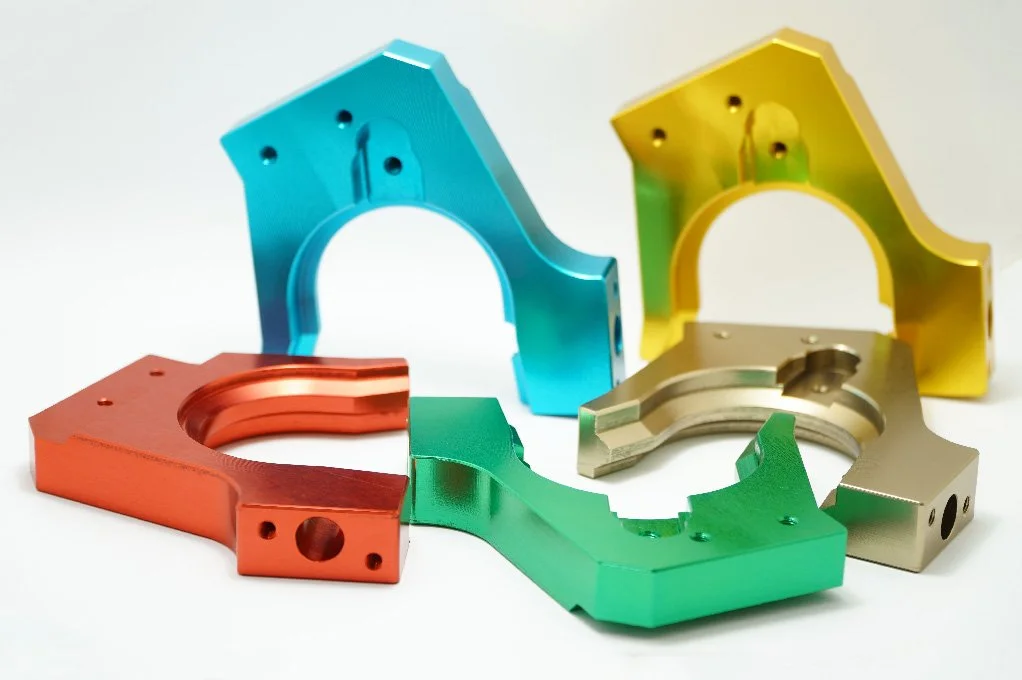
Sulfuric acid anodizing is a process that thickens the natural oxide layer on aluminum through an electrochemical reaction in a sulfuric acid bath, improving corrosion resistance, wear, and appearance. Buffalo processing uses professional dyes to create decorative finishes, and is also an excellent base for primers and coatings. All anodizing is done following MIL-PRF-8625 guidelines.